
Division of Health Sciences: Everything You Need to Know About This Academic Field
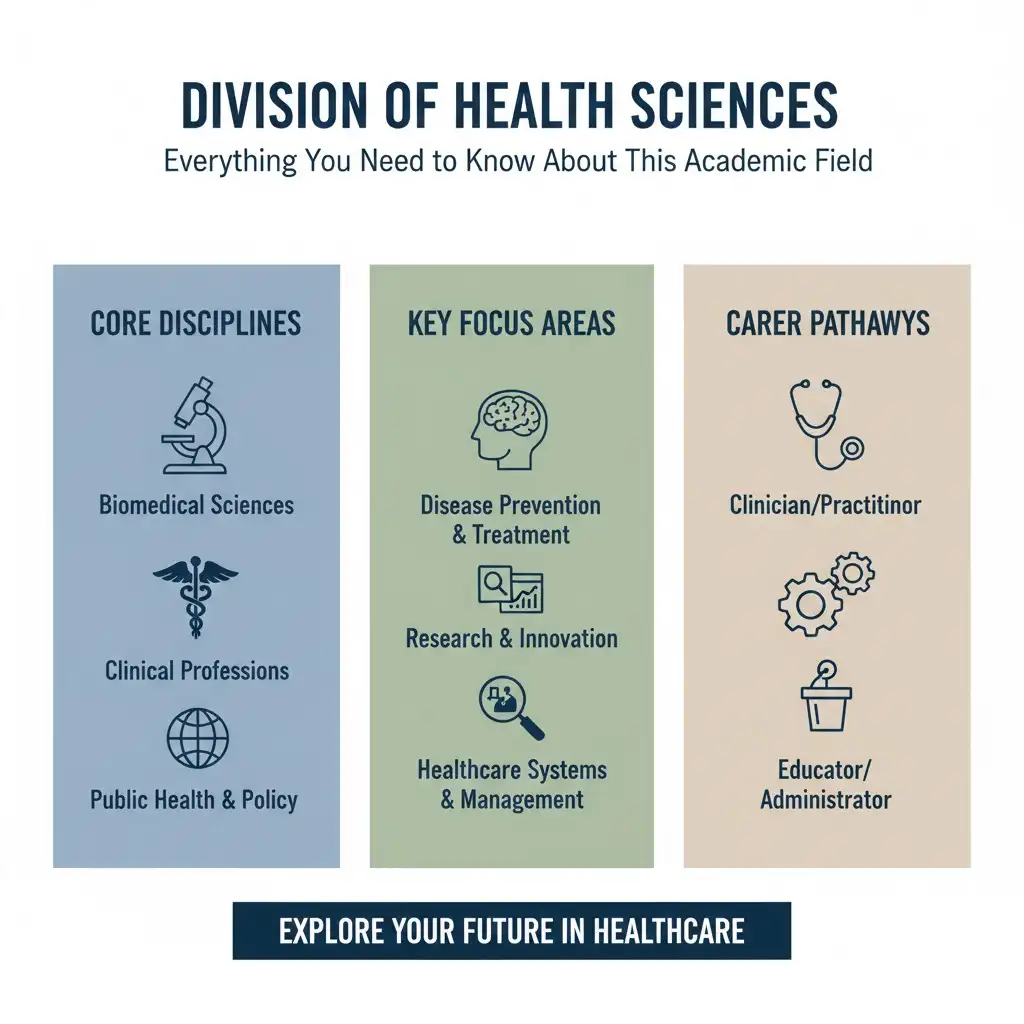
Healthcare has expanded beyond the traditional medical field to a multidisciplinary, technology driven, and a multidisciplinary. With increasing populations and healthcare issues grow more complex the demand for qualified specialists in healthcare, research and public health is continuing to increase. In the middle of this shift lies the Division of Health Sciences, an academic discipline that is designed to train for the future of professionals that can increase health outcomes on all levels.
This article gives a clear and concise description about the Division of Health Sciences, its goals, scope and the potential of its future growth to help professionals and students comprehend why this area is important more than ever before.
What is Division of Health Sciences?
The Division of Health Sciences is an academic department, or faculty in colleges and universities that is focused on research, education and development related to health care and human systems. It combines a range of health-related disciplines within an academic structure that encourages integration of learning and cooperation.
Instead of focusing solely only on one career instead, it is important to recognize that the Division of Health Sciences supports an overall approach to wellness. It integrates scientific understanding and clinical expertise, as well as technology and knowledge of society to help students prepare to take on a variety of roles in health and well-being.
The purpose for Division of Health Sciences Division of Health Sciences
The primary goal that is the primary goal of Division of Health Sciences is to develop and train specialists who are equipped to address the problems in health that are relevant to the present. It includes prevention of disease as well as treatment for patients and health promotion, as well as research and management of healthcare.
In offering an interdisciplinary educational program The division assists students see how the various aspects of healthcare are connected. This method encourages innovative thinking as well as teamwork as well as critical thinking. All of these is essential for modern healthcare settings.
Academic Programs at the Division of Health Sciences
The Division of Health Sciences offers many educational programs for undergraduates or graduate levels. They are designed to address the changing requirements of the healthcare system.
The most common programs are healthcare sciences, health and human services nursing, biomedical science, health informatics, allied health and rehabilitation sciences. A few divisions also provide specialized programmes in nutrition, social health and mental illness as well as healthcare administration.
Every program is focused on theory and application to prepare students for work experience or research that is more advanced.
The most important disciplines within the Division of Health Sciences
The Division of Health Sciences includes many interconnected disciplines. Biomedical science focuses on the biology of both health and illness. Health sciences that are clinical and related focus on patient care and diagnostic treatments.
Health studies in the public sector focus on population health in terms of disease prevention, health, and the health policies. Informatics and health technology explore information, technology, and the latest innovations for healthcare delivery. The social and behavioral health sciences investigate the way in which environment, lifestyle and habits affect health.
These disciplines together give a holistic knowledge of health, from the personal to global.
Job Opportunities after completing Health Sciences
The graduates of the Division of Health Sciences have access to a range of lucrative and varied options for careers. They are employed in clinics, hospitals labs, research institutes as well as public health agencies.
Other careers include health education, management of healthcare as well as policy development Biotechnology, the field of digital health. Certain graduates go on to pursue professional programmes like dental, medicine as well as physiotherapy. They also earn advanced studies qualifications.
The versatility of this field permits individuals to change their career as the field of healthcare changes.
Relevance to The Division of Health Sciences in Modern Society
Today’s health challenges are aging populations as well as chronic illness and mental health issues, and the global health risk. In the present, the Division of Health Sciences plays crucial roles in the resolution of the issues through training of experts who can understand health issues in a variety of ways.
The field of prevention focuses health, community involvement and evidence-based decision-making. Additionally, it promotes ethical behavior and awareness of culture, that are crucial to ensure health systems that are fair and equitable.
The future Scope of the Division of Health Sciences
Future of the Division of Health Sciences is technologically advanced and innovative. Innovations in digital health as well as genomics, artificial intelligence and personalizing medicine are creating the future of learning.
The academic programs of the past are increasingly focusing on inter-disciplinary research, virtual learning and solution-based thinking. The graduates will have to cross-cut across industries and adjust to the rapid pace of change which makes this area difficult and full of opportunities.
Learning skills are developed within Health Sciences in the Division of Health Sciences
Students who study in the Division of Health Sciences develop essential skills that go far beyond basic knowledge. They learn critical thinking, communicating and data analysis, teamwork and ethical thinking.
Also, they get practical experiences through internships, labs and community initiatives. The skills they acquire help graduates be successful in a variety of healthcare settings and in leadership roles.
FAQs About Division of Health Sciences
Q: What is the Division of Health Sciences?
The Division of Health Sciences is an academic field that brings together multiple health related disciplines to educate and train healthcare professionals.
Q: What can you study in the Division of Health Sciences?
You can study areas such as health sciences, public health, biomedical sciences, nursing, allied health, and healthcare management.
Q: Is the Division of Health Sciences good for future careers?
Yes, it offers strong career prospects due to growing demand for healthcare and health related professionals.
Q: Can Division of Health Sciences lead to medical school?
Yes, many students use health sciences programs as a pathway to medicine or other professional healthcare degrees.
Q: Why is the Division of Health Sciences important?
It supports better health outcomes by preparing skilled professionals to meet modern and future healthcare challenges.
Also Read: Mental Health Ice Bucket Challenge: Raising Awareness and Promoting Positive Change
Follow: Well Health Organic Fitness Tips