What Is Commercial Health Insurance?
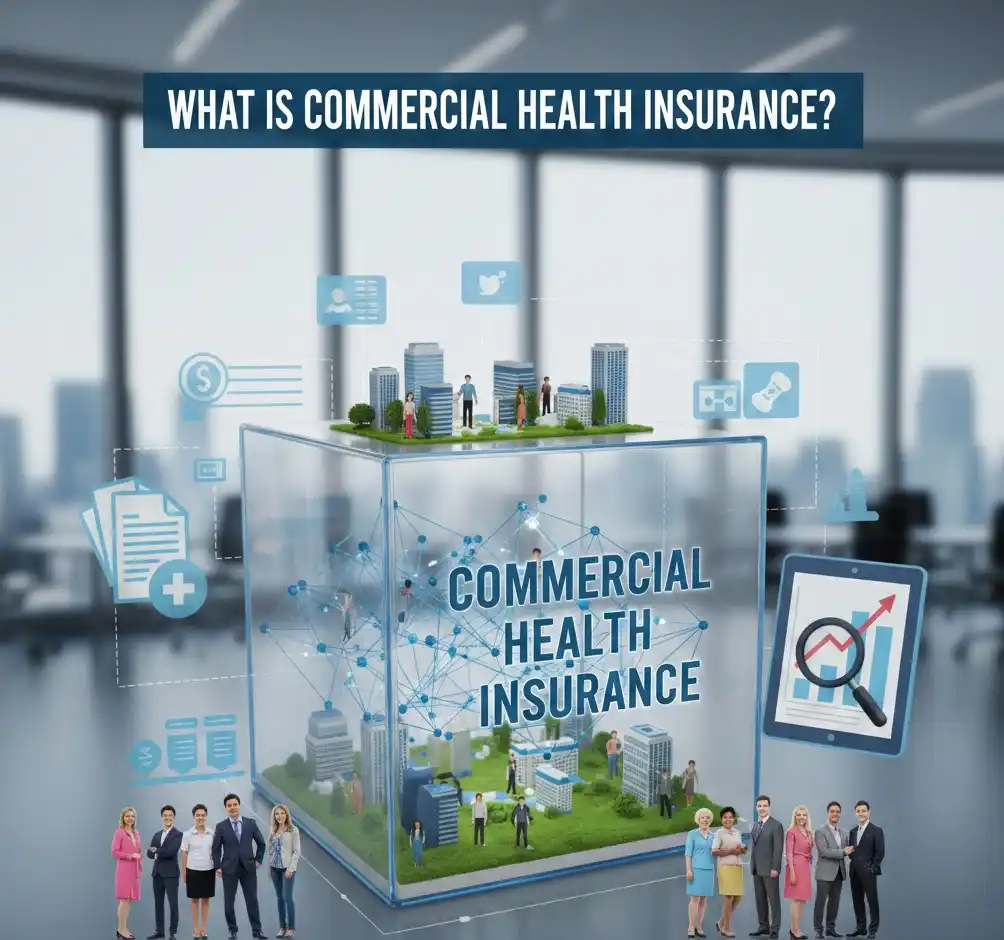
Commercial health insurance is a type of health coverage provided by private insurance companies. It helps individuals, families, and employees pay for medical expenses such as doctor visits, hospital stays, medicines, surgeries, and preventive care. Unlike government-funded health programs, commercial health insurance is paid for through monthly premiums and is offered by private insurers.
This form of insurance is one of the most common ways people protect themselves from high healthcare costs, especially in countries where medical treatment can be expensive.
Table of Contents
ToggleHow Commercial Health Insurance Works
Commercial health insurance works on a simple principle:
you pay a fixed amount regularly, and in return, the insurance company helps cover your medical bills when you need care.
Here is how the process usually looks:
-
You choose a health insurance plan from a private company
-
You pay a monthly or yearly premium
-
When you need medical treatment, the insurer pays part or all of the cost based on your policy
-
You may need to pay a small amount yourself, such as a deductible or co-payment
The exact coverage depends on the plan you select.
Types of Commercial Health Insurance
Commercial health insurance generally falls into two main categories.
Individual and Family Health Insurance
These plans are purchased directly by individuals or families. They are suitable for self-employed people, freelancers, or anyone not covered by an employer. Coverage and costs vary depending on age, health condition, and benefits selected.
Employer-Sponsored Health Insurance
Many companies offer health insurance as part of their employee benefits. In this case, the employer usually pays a portion of the premium, making it more affordable for employees. These plans often provide broader coverage at lower costs compared to individual plans.
What Does Commercial Health Insurance Cover?
Coverage can differ from one policy to another, but most commercial health insurance plans include:
-
Doctor and specialist visits
-
Hospitalization and surgery
-
Prescription medicines
-
Diagnostic tests such as blood tests and scans
-
Preventive services like health checkups and vaccinations
-
Emergency medical care
Some plans also offer additional benefits such as mental health support, maternity care, or wellness programs.
Costs Involved in Commercial Health Insurance
Understanding the costs is important before choosing a plan. Common cost components include:
-
Premium: The amount you pay regularly to keep the policy active
-
Deductible: The amount you pay before insurance starts covering expenses
-
Co-payment: A fixed amount paid during each medical visit
-
Co-insurance: A percentage of costs shared between you and the insurer
Lower premiums often come with higher out-of-pocket costs, while higher premiums usually mean better coverage.
Advantages of Commercial Health Insurance
Commercial health insurance offers several benefits:
-
Financial protection against high medical bills
-
Access to a wide network of hospitals and doctors
-
Faster access to quality healthcare services
-
Coverage options that can be customized to your needs
-
Peace of mind during medical emergencies
For many people, it acts as a safety net that prevents healthcare expenses from becoming a financial burden.
Limitations You Should Know
While commercial health insurance is helpful, it also has some limitations:
-
Premiums can be expensive for comprehensive plans
-
Certain treatments may not be covered
-
Waiting periods may apply for specific conditions
-
Claims can be denied if policy terms are not followed
Reading the policy details carefully is essential to avoid surprises later.
Who Should Consider Commercial Health Insurance?
Commercial health insurance is suitable for:
-
Working professionals
-
Business owners and freelancers
-
Families looking for medical security
-
Employers who want to support employee well-being
Anyone who wants reliable access to healthcare and financial protection can benefit from it.
How to Choose the Right Commercial Health Insurance Plan
To select the right plan, consider these points:
-
Your medical needs and family size
-
Coverage benefits and exclusions
-
Monthly premium affordability
-
Hospital network availability
-
Claim settlement process and customer support
A well-chosen plan balances cost with coverage and long-term needs.
Final Thoughts
Commercial health insurance plays a crucial role in modern healthcare systems. It offers flexibility, quality care, and financial security in times of illness or emergencies. By understanding how it works and choosing the right plan, individuals and families can protect both their health and finances effectively.
FAQs
What is the main purpose of commercial health insurance?
It helps cover medical expenses and reduces the financial burden of healthcare.
Is commercial health insurance the same as government health insurance?
No, it is provided by private companies, while government insurance is funded by public programs.
Can I buy commercial health insurance for my family?
Yes, many insurers offer family floater plans under commercial health insurance.
Does commercial health insurance cover emergencies?
Most plans include emergency medical treatment and hospitalization.
Is commercial health insurance worth it?
Yes, especially if you want access to quality healthcare without worrying about high medical costs.
Also Read: Mywebinsurance.com Health Insurance: A Complete Guide for Smart Coverage